START WITH HOW YOU DRIVE
What Are the Best All-Weather Tires for a Honda?
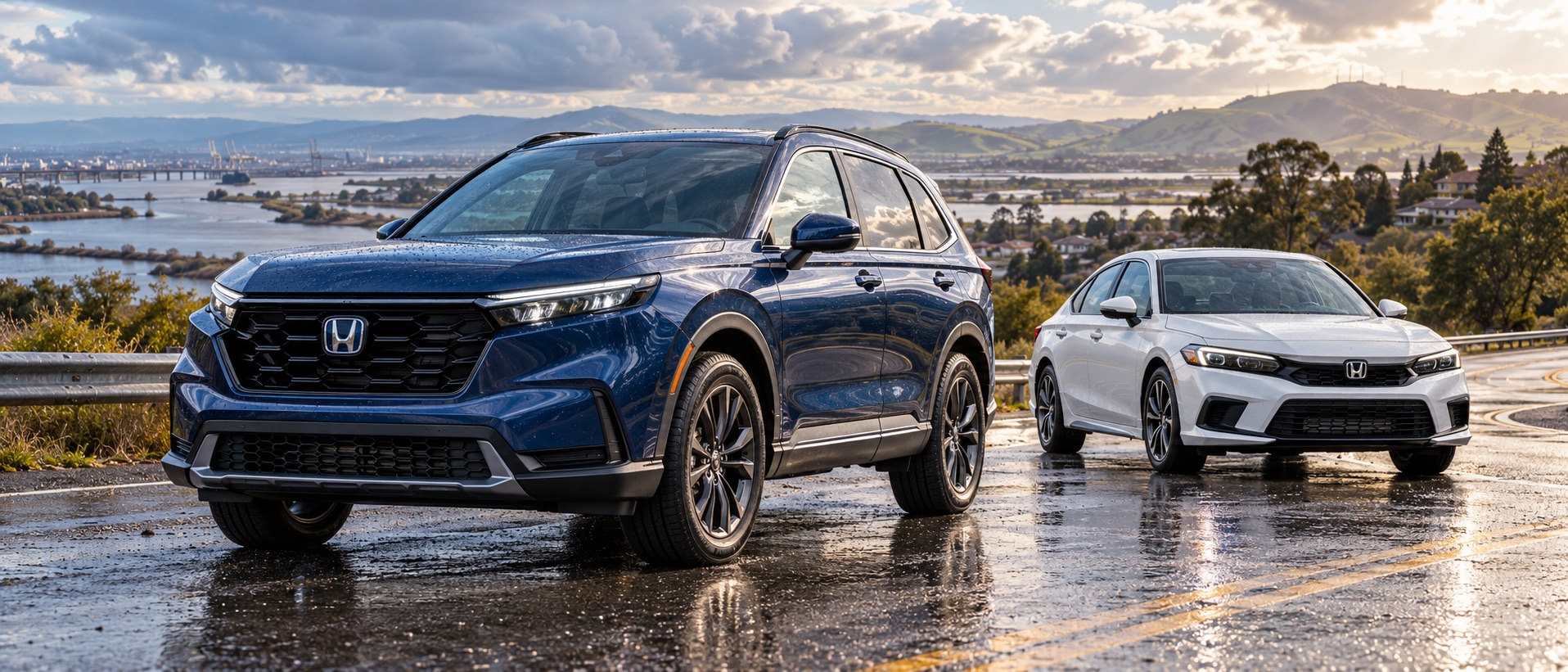
For regular wet-road commuting, we start with Michelin CrossClimate2 when braking grip is your priority and Pirelli Cinturato WeatherActive when you also want responsive steering on dry pavement. For a quieter ride over everyday miles, Continental SecureContact AW belongs in the comparison. We confirm the correct size and load rating for your Honda before recommending a set.
You do not need snow-rated tires just to handle a rainy commute. A quality conventional all-season tire can be the better match when your driving stays on local streets and highways. We compare wet grip, cabin noise, tread life, and cost before deciding whether the extra snow capability of an all-weather tire is worthwhile.
FIVE TIRES, FIVE DIFFERENT STRENGTHS
Which All-Weather Tire Fits Your Honda?
We'd consider these five for different reasons. One places more emphasis on rainy-road stopping, another on steering feel or comfort, and one is built around SUV applications. Choose the strength that matters most to you; we'll verify the fit for your Honda.
← Swipe or scroll to compare →
01 FOR SLICK HIGHWAY MILES
Michelin CrossClimate2

For the Highway 4 commute in heavy rain, CrossClimate2 is one of our first all-weather choices. Its distinctive V-shaped tread channels water, while strong wet-road braking gives you a useful advantage when traffic slows suddenly. It also carries snow-rated capability for the occasional winter trip beyond everyday local driving.
What you get
Strong wet-road stopping traction for regular highway use, with snow-rated capability when you travel to the mountains.
What to consider
The ride feels firmer than some touring tires. Its directional tread also affects rotation patterns, so we review both comfort and long-term care before you choose it.
Best fit: Frequent wet-road commuting, with occasional mountain travel
02 FOR EVERYDAY ROAD FEEL
Pirelli Cinturato WeatherActive

For a Civic or Accord that spends most days on dry pavement and wet commutes, Cinturato WeatherActive brings a responsive steering feel. It balances wet-road control with comfortable everyday road manners, so the tire still feels right after the storm passes. Its snow rating is an added benefit when your travel takes you beyond local roads.
What you get
Responsive steering and steady wet-road handling for the mix of dry and rainy miles you drive most often.
What to consider
This is a year-round touring choice, not a substitute for dedicated winter tires on frequent icy or deeply snowy trips. We confirm the fitment for your exact Honda.
Best fit: Civic or Accord drivers who value everyday steering feel
03 FOR A QUIETER COMMUTE
Continental SecureContact AW
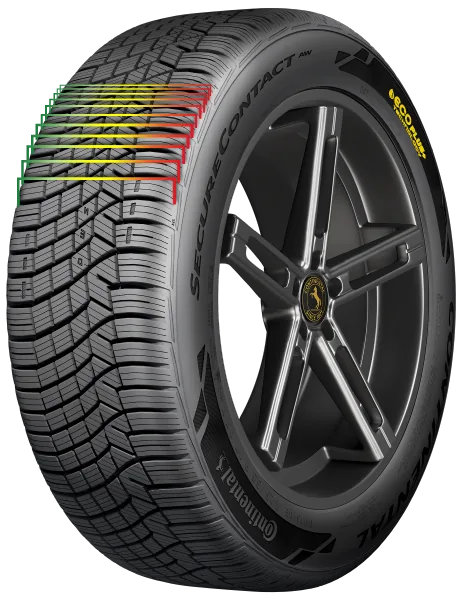
If your Honda spends hours on the freeway, road noise and ride comfort matter every day, not just during storms. SecureContact AW is our comfort-oriented all-weather comparison, combining a settled ride with wet traction. We weigh those qualities against the exact tire size, treadwear coverage, and price for your Honda.
What you get
A quieter, more comfortable-feeling daily drive with dependable wet-road traction.
What to consider
We check the treadwear warranty, available size, and cost alongside the quieter ride. Comfort is only a benefit if the tire also meets your Honda's requirements.
Best fit: Long daily drives where road noise and comfort matter
04 FOR WET-ROAD FEATURES
Goodyear Assurance WeatherReady2
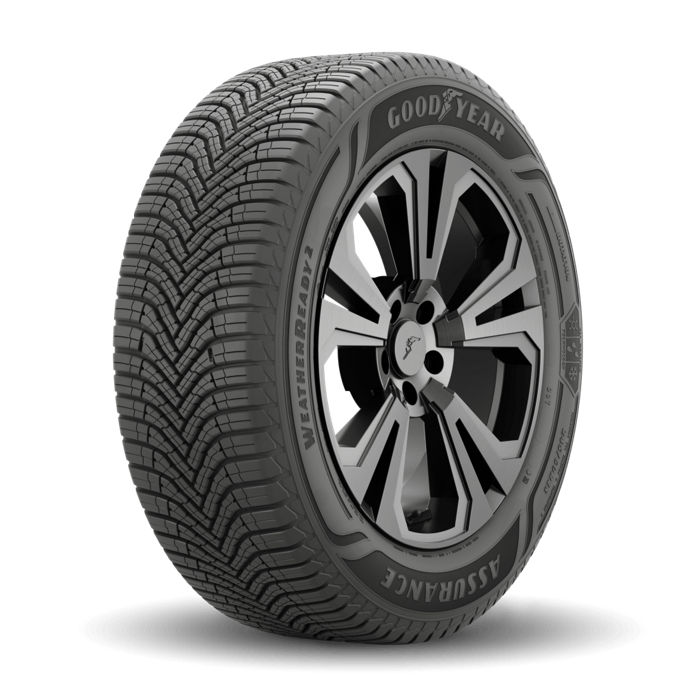
WeatherReady2 is worth comparing when heavy showers and standing water are regular concerns. Its sweeping tread grooves help move water away as the tire rolls, supporting contact with wet pavement. You still need to slow down for deep water; tread design cannot eliminate hydroplaning. Its snow rating adds flexibility for occasional colder trips.
What you get
A water-clearing tread design for rain-heavy commutes, with year-round usability.
What to consider
No tire eliminates hydroplaning when water is deep or speed is too high. We check size and treadwear coverage and compare the full wet-weather balance, not just the shape of the grooves.
Best fit: Rain-heavy driving with an occasional snow trip
05 FOR COMPATIBLE HONDA SUVS
Pirelli Scorpion WeatherActive

For a CR-V or Pilot, we start with the tire size, load rating, and everyday demands of carrying passengers and gear. Scorpion WeatherActive is worth comparing when an SUV-oriented size meets those requirements. Wet-road traction and a comfortable family drive come first; added snow capability matters when your plans include winter travel.
What you get
Year-round traction in select SUV sizes that meet your Honda's load requirements.
What to consider
Scorpion and Cinturato WeatherActive are different tire lines. We check the exact Scorpion size and specifications rather than treating them as interchangeable.
Best fit: A CR-V or Pilot with a compatible tire size
Swipe or scroll to see all five. Available models and sizes depend on current stock. Call our service team and we'll confirm the best available fit for your Honda.
CHOOSE THE DRIVE THAT SOUNDS LIKE YOURS
What Matters Most on Your Drive?
Choose what describes your usual drive. Wet-road stopping, road noise, and occasional mountain travel lead to different tire priorities.
Most of my miles are commuting, errands, and rain
For daily traffic and rainy commutes, we compare CrossClimate2 for wet braking, SecureContact AW for cabin comfort, and WeatherReady2 for its water-clearing tread design. Each offers a different balance, so we also check the right size and overall cost for your Honda.
When snow is not part of your plans, we also put a quality conventional all-season tire beside these options. That keeps your choice focused on the rain traction, quietness, and tread life you use every week.
I drive here most of the year, but visit the Sierra
We'd start with CrossClimate2 if rain stopping is your first concern, or Cinturato WeatherActive if you want a more responsive everyday feel. Both carry snow-rated capability for occasional mountain travel while remaining suitable for normal East Bay driving.
Before you head into the Sierra, check your remaining tread, the road's current chain controls, and the traction-device guidance for your Honda. Even snow-rated tires do not automatically exempt you from carrying or using chains; frequent ice and deep snow call for dedicated winter tires.
My family rides in a CR-V, HR-V, or Pilot
For a CR-V, HR-V, or Pilot, we verify size and load rating before comparing CrossClimate2, WeatherReady2, and compatible Scorpion WeatherActive sizes. Wet grip still comes first, but passenger load and cabin comfort matter on a family trip too.
For an AWD Honda, we also review how closely the tires match in size, type, and tread wear. A good SUV tire choice supports the way the whole vehicle works, not just one corner of it.
UNDERSTAND THE CATEGORY
All-Weather vs. All-Season Tires: Which Do You Need?
For the usual commute on city streets and freeways, both all-season and all-weather tires can deliver good wet traction. The distinction is added snow capability: all-weather tires meet a snow-traction standard, while conventional all-season tires focus on everyday road use. That extra capability is most useful when your trips take you into winter mountain conditions.
| Category | Where It Makes Sense | What to Watch |
|---|---|---|
| All-weather Typically 3PMSF-rated |
Rainy commutes, dry summers, and occasional snowy trips—all on one set | Look at wet-road braking, noise, tread life, and how the tire fits your Honda |
| Conventional all-season | Mostly local roads, freeway miles, and little or no snow | A strong all-season can deliver excellent wet grip without paying extra for snow capability you rarely use |
| Dedicated winter | Regular mountain winters, packed snow, and icy roads | Winter tires are made for sustained cold and are not intended as a year-round warm-weather choice |
| Summer performance | Warm-weather performance driving on the right car | Some grip exceptionally well in rain, but are not intended for snow, ice, or sustained freezing conditions |
What does the mountain-and-snowflake symbol mean?
The three-peak mountain snowflake (3PMSF) on the sidewall means the tire meets a defined snow-traction requirement. It doesn't measure wet braking or ice grip, and California chain rules still apply. We check the actual marking and tread depth before you count on a tire for a Sierra trip.
When would we recommend winter tires instead?
If you regularly drive on packed snow, ice, or extended freezing roads, we'd put a dedicated winter tire ahead of a year-round compromise. Its cold-weather rubber and tread are built around those conditions; it's not the set we'd leave on through a warm East Bay summer.
THE RAIN-TRACTION QUESTION
What Are the Best Tires for Rain?
For rainy-road driving, our first questions are simple: how well does the tire slow your Honda, how predictably does it steer, and how much tread remains to clear water? Michelin CrossClimate2 is one of our leading all-weather choices for wet braking; Pirelli Cinturato WeatherActive also balances wet traction with responsive dry-road handling. When snow is rarely part of your plans, we'd compare a strong performance all-season option such as Michelin Pilot Sport All Season 4 as well. An all-weather snow rating by itself doesn't make a tire the best choice for rain.
Wet stopping
Good wet-road grip helps your Honda slow more effectively when traffic suddenly backs up. Tread design matters, but it's the tire's actual grip on wet pavement that makes the difference when you need to brake.
Standing water
Grooves give standing water a path out from under the tire. As tread wears down, there's less room for that water, increasing hydroplaning risk. Slow down for puddles; even fresh, high-quality tires have limits.
Steering on slick roads
We also pay attention to how a tire responds during turns, merges, and lane changes. Predictable steering lets you make smooth corrections on slick pavement. Speed and road conditions still set the limits.
YOUR EXISTING TIRES MATTER TOO
Are Your Tires Ready for the Next Rainstorm?
Wet-road traction depends on more than the tire model. As tread wears, there is less room for water to escape, so we measure all four tires before recommending a rotation or replacement. Start with the rain-related checkpoints below; the snow-depth requirement matters if you plan a mountain trip.
4/32 in.
Start planning for rain
Around 4/32 inch, wet-road grip deserves a replacement conversation. Worn grooves have less room to clear water, so we pay attention before storm season rather than waiting for the legal minimum.
2/32 in.
Time to replace
At 2/32 inch, the tire has reached the widely used worn-out limit. Replace it rather than trying to stretch the remaining tread through another rainy commute.
6/32 in.
Think ahead for snow trips
For California chain-control purposes, a tire treated as a snow tire needs at least 6/32 inch of tread. We check the remaining depth and sidewall markings before you rely on an all-weather tire for a Sierra trip.
We check tread depth across each tire because wear along one edge tells a different story from even wear across the whole tread. Pulling, vibration, cuts, and bulges also deserve an inspection. That way, a fresh set doesn't go onto a Honda with an underlying wear problem left unresolved.
CUSTOM FITMENT, NOT GUESSWORK
The Right Tire Has to Fit Your Honda—Not Just Your Plans
Your daily commute, wet-road mileage, and any winter mountain trips determine the traction priorities.
CR-V, HR-V, and Pilot: We start with proper size and load capacity, then choose the wet-road traction and ride quality that suit your daily passengers and longer trips.
Hybrid models: Rolling resistance is how much energy a tire takes to keep moving. A tire change can affect fuel economy, so we weigh efficiency alongside traction and comfort.
AWD models: Tires need to meet Honda's matching and wear requirements across the set. AWD helps your Honda get moving; it doesn't give you a shorter stopping distance in rain.
Set pressure using the cold-tire number on your driver's door label, not the maximum pressure printed on the tire sidewall. We can check that setting when we inspect your tires.
DRIVING IN EAST CONTRA COSTA
Get Your Honda Ready for Rain in East Contra Costa
After a long dry spell, the first rain around Pittsburg and Antioch can leave familiar streets unexpectedly slick. Check for cuts, uneven wear, or a tire that keeps losing air before you head into the next storm. If the tread is close to 4/32 inch, let's talk about replacement while there's still time to choose the right set.
A vibration, pulling to one side, or wear along a single edge isn't just a tire-brand question. Bring your Honda to our service team so we can check whether pressure, alignment, damage, or another issue needs attention before new tires go on.
Before the Season’s First Downpour
- Look at the tread on all four tires, not just the front pair.
- Check tire pressure while the tires are cold.
- Have uneven wear, vibration, or pulling inspected before it gets worse.
- Make sure the wipers clear the windshield and all lights work.
- Leave more stopping space and slow down before standing water.

CONVENIENT TIRE SERVICE IN PITTSBURG
Choose Your Tires With Delta Honda
At Delta Honda in Pittsburg, our service team checks the tires on your Honda, confirms the correct replacements, and handles the installation and follow-up care. You can talk through the differences before choosing a set, then return to the same service department for rotations, balancing, and alignment. As part of family-owned Harvey Auto Group, we give you a familiar place to return for the next rotation, inspection, or tire question.
Honda-Certified Technicians
Our factory-certified team knows Honda tire-size, load, and service requirements. That matters when your trim or AWD system needs more than a one-size-fits-all recommendation.
Tire Service & Alignment
We handle inspections, mounting, balancing, rotations, replacement, and wheel alignment. If the old set has uneven wear, we inspect what caused it before installing replacement tires.
Honda Express Service
Our Honda Express Service handles eligible routine maintenance without an appointment. For tire replacement, give our service department a call so we can confirm the right service visit and tire options.
Documented Honda Service
We record completed Honda service so you have a useful maintenance history as the tires wear. That's especially valuable when you're tracking rotations and planning your next inspection.
ANSWERS BEFORE YOU CHOOSE
Best All-Weather Tire FAQs
What are the best all-weather tires for a Honda?
For wet-road braking, we start with Michelin CrossClimate2; for responsive everyday handling, we compare Pirelli Cinturato WeatherActive. Continental SecureContact AW belongs in the discussion when a quieter ride matters. We confirm tire size and load rating before recommending any of them.
Are all-weather tires better than all-season tires?
Not automatically. Both can be excellent in rain. All-weather tires add tested snow traction, which earns its place when you travel into winter mountain conditions. If your driving stays on local streets and freeways, we also compare conventional all-season tires for wet grip, comfort, and tread life.
What are the best tires for rain?
For rain, we look first at wet braking, steering response, and remaining tread depth. Michelin CrossClimate2 is a strong all-weather choice, while a high-performing conventional all-season tire can be just as compelling for a Honda that stays out of the snow. The correct size and good tread condition matter just as much as the tire name.
Can I use all-weather tires for trips to the Sierra?
Yes, an appropriately sized all-weather tire with the right snow marking and enough tread is useful for occasional Sierra trips. California chain controls still apply. Tires counted as snow tires need at least 6/32 inch of tread, and you can still be required to carry or install traction devices. For frequent icy or snowy travel, we'd discuss dedicated winter tires.
When should I replace my tires for rainy weather?
For regular rainy driving, we start discussing replacement at about 4/32 inch because the worn tread has less room to clear water. At 2/32 inch, replace the tire. We also inspect for cuts, bulges, age-related damage, and uneven wear rather than looking at tread depth alone.
Which all-weather tires work with a Honda CR-V?
We confirm the year, trim, wheel size, and load rating of your CR-V first. Depending on its specifications, CrossClimate2, WeatherReady2, and Scorpion WeatherActive are worth comparing. If your CR-V has AWD, we also check matching tire condition across the set.
Will all-weather tires change my Honda hybrid’s MPG?
They can. Tire design, weight, and rolling resistance affect how much energy your hybrid uses. We compare fuel-economy considerations with wet grip and comfort after confirming the correct size and load requirements.
Can Delta Honda check my tires and help me choose replacements?
Yes. Bring your Honda to our Pittsburg service department for tire inspections, rotations, balancing, replacement, and alignment. We can check your current tread, confirm compatible options, and discuss the next service visit. Call us at 925-940-0596 or use our online service scheduler.
YOUR NEXT STEP
Get the Right Tires for Your Honda
Ready for new tires or concerned about tread wear? Our Delta Honda service team handles tire inspections, rotations, balancing, and replacement. We'll help you review tire condition, confirm fitment, and find the right next step for wet-road traction, daily commuting, ride comfort, and your plans for winter travel.